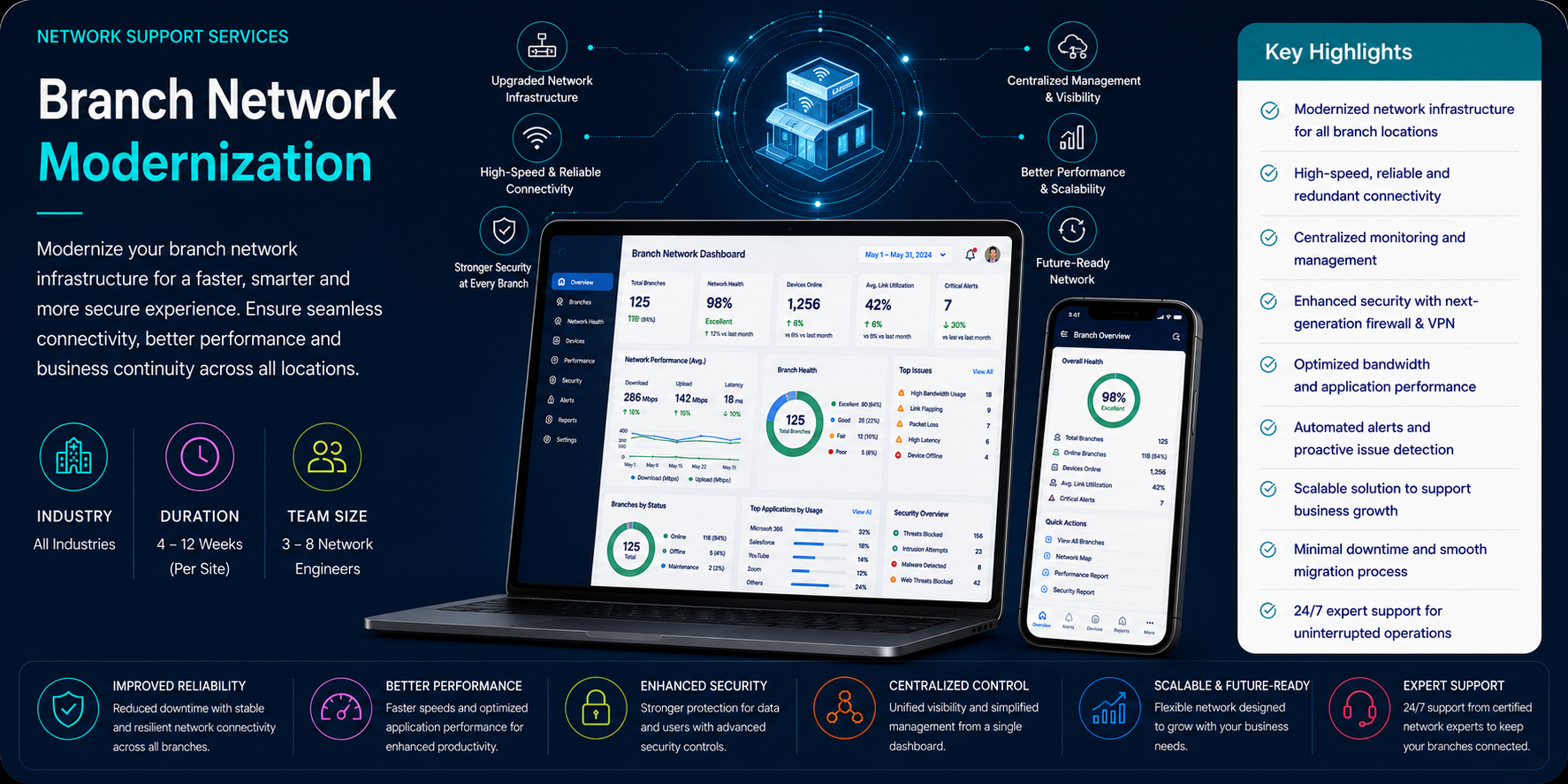

The Challenge
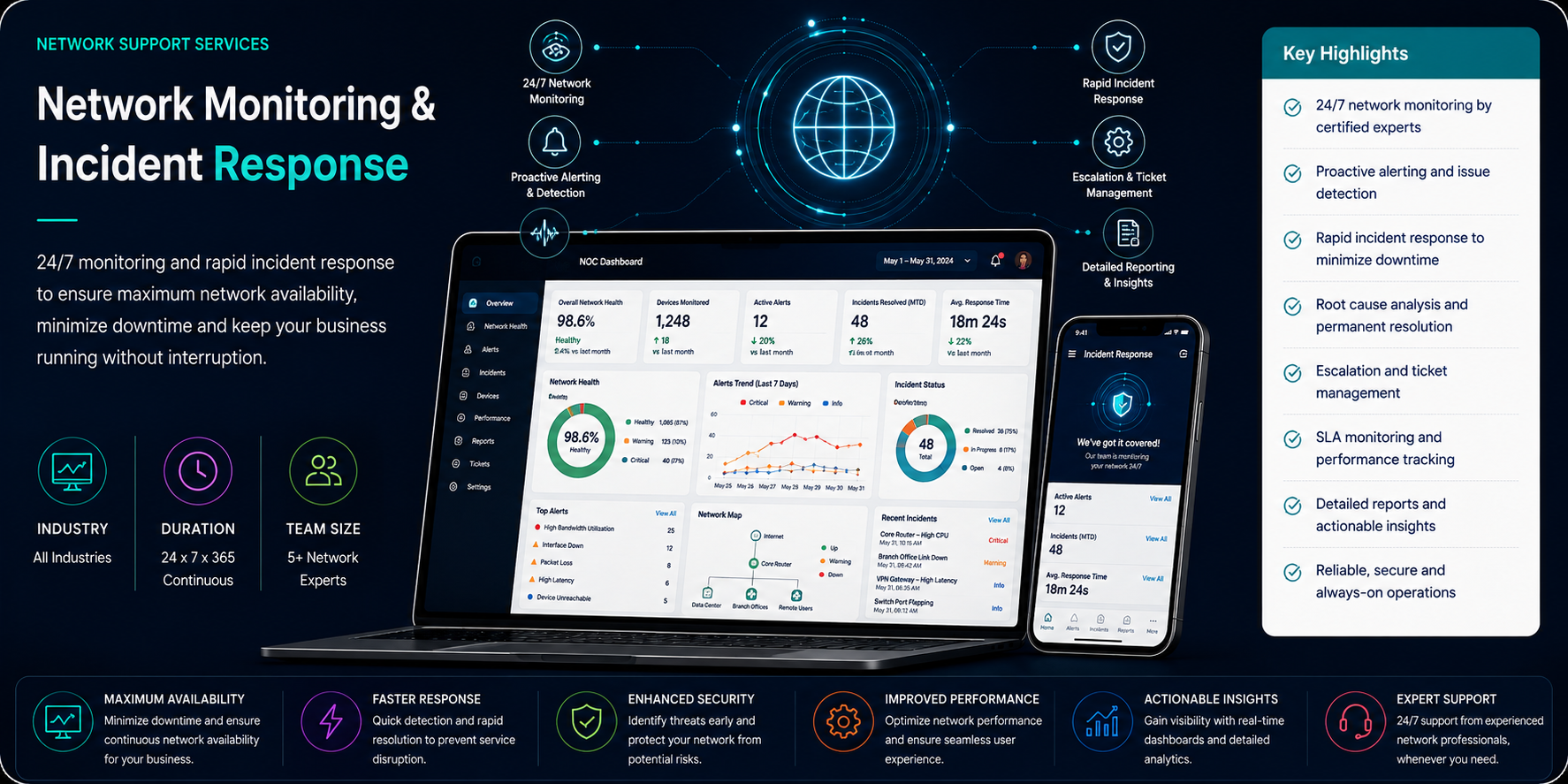
Network incidents were often identified after user impact had already occurred, and troubleshooting information was spread across disconnected monitoring sources.
Incidents were detected inconsistently
Monitoring information was fragmented
Troubleshooting required manual correlation
Escalation workflows lacked consistent structure

Our Solution
We established centralized network monitoring and incident-response workflows to detect issues earlier and give operations teams clearer diagnostic information.
Centralized network monitoring
Threshold and availability alerts
Incident triage workflows
Operational dashboards and runbooks
Key Features
Device and link monitoring
Availability and threshold alerts
Incident dashboards
Escalation workflows
Operational runbooks
Implementation Approach
The program established priority monitoring signals first, then aligned alerting with practical incident triage and escalation procedures.
Identified critical network assets
Standardized monitoring signals
Configured actionable alerts
Defined incident triage and escalation
Validated response runbooks
Business Impact
Earlier detection of network issues
Faster incident triage
Reduced manual monitoring effort
Better operational visibility

Outcomes
A centralized network monitoring capability
More consistent incident response
Improved visibility into infrastructure health
Foundation for proactive operations
Technology Direction
The capability can progress toward event correlation, automated remediation, service-level monitoring and predictive network operations.
Scalable architecture aligned to the client’s operating model.
Secure data handling and controlled access.
Integration-ready foundations for connected systems.
Clear path for analytics, automation and future enhancement.
Technologies Used
SNMPNetwork MonitoringSyslogAlertingIncident Management
Service Capabilities
Network MonitoringIncident Response
Similar Case Studies
Explore related projects delivered under Network Support.